

Bitcoin

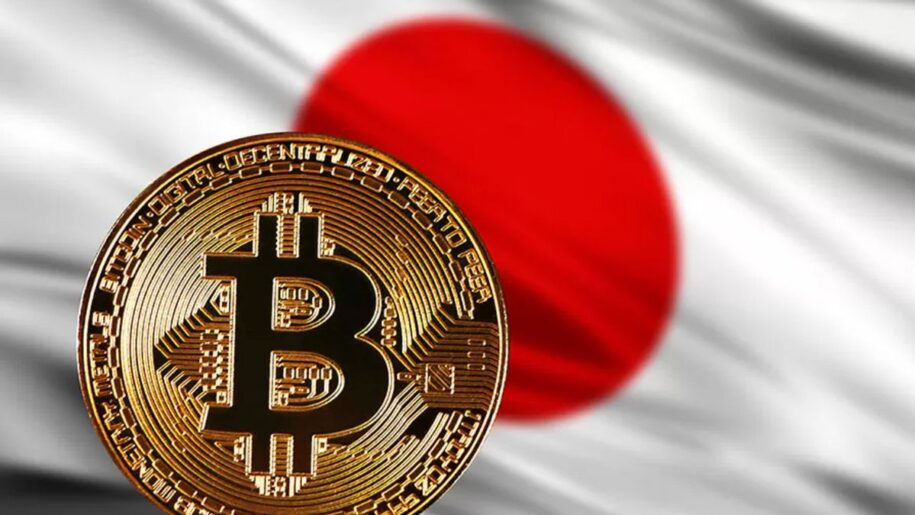
In a surprising convergence of finance, technology and energy policy, Japan is exploring how Bitcoin mining could help stabilize the country’s power grid.
of initiativeThe project, powered by hardware provided by Chinese manufacturer Canaan, will be the country’s first known national collaboration experiment to connect blockchain infrastructure to renewable energy management.
Energy innovation that’s not just about mining
For decades, Japan has struggled with one of the most delicate balances in its energy economy: how to prevent renewable power from being wasted when supply exceeds demand. Now, instead of cutting back on wind and solar output, Japan’s major power companies plan to use that surplus power for computing. in particular, Bitcoin mining.
Canaan has not disclosed its partners, but all 10 of Japan’s regional power companies are partially government-owned, effectively making the project tied to the state. Analysts believe the partnership involves Tokyo Electric Power Company (TEPCO). TEPCO previously conducted small-scale mining pilots through its subsidiary Agile Energy X.
From solar overflow to digital value
The concept is not new, with TEPCO already testing Bitcoin mining in Gunma and Tochigi prefectures as a way to monetize surplus electricity. These early tests, first revealed by Asahi Shimbun in 2024, were aimed at converting idle renewable energy into digital assets rather than leaving turbines idle.
This new agreement extends that idea to the national level. Rather than viewing Bitcoin mining as a waste of resources, Japan positions it as a load balancing mechanism, a flexible consumer that helps stabilize grid activity in real time.
Grid-aware mining
Canaan’s next-generation Avalon A1566HA rig will take center stage. Unlike traditional machines that operate at a fixed capacity, these water-cooled servers can automatically change performance based on power conditions.
If you have plenty of energy, you can overclock to absorb the excess. When demand spikes, it can be underclocked to reduce the strain on the grid. The result is a digital system that behaves like a living circuit, balancing energy supply with computational demands.
“This is what we call energy interactive computing,” explained Canaan CEO Nangeng Zhang. “Bitcoin mining will act as a stabilizer for renewable power grids, not an enemy. We plan to deploy similar systems across Asia, North America, and Europe by 2026.”
Broad meaning: Japan also joins the club
This movement has global significance. According to VanEck’s Matthew Sigel, Japan has joined the list of 11 countries whose governments directly or indirectly support Bitcoin mining efforts. Although the United States is not among them, the list includes countries that are experimenting with state-aligned or publicly funded mining infrastructure.
Rumors have been circulating for years that Tokyo Electric Power Company (9501 JP) is secretly mining Bitcoin, but nothing has been confirmed.
Now, $CAN has ordered 4.5 MW from a “major regional power company” in Japan, finally adding Japan to the list of countries where the government mines Bitcoin… pic.twitter.com/D5kebQGR4q
— Matthew Siegel, CFA Recovery (@matthew_sigel) October 31, 2025
Siegel described the development as a “historic moment” for Japan, noting that this is the first time Bitcoin mining has been incorporated into a nation’s government-connected energy system.
Policy tailwinds behind the experiment
Japan’s approach comes amid a broader review of digital asset policy. Lawmakers are considering reforms that would classify virtual currencies as financial instruments under the Financial Instruments and Exchange Act and impose a flat 20% tax on virtual currency profits.
By linking mining with renewable infrastructure, Japan could legalize cryptocurrencies in a way that few countries have, not as speculative assets but as technological components of energy resilience.
Towards 2025 and beyond
The new facility, operated by an unnamed local power company, is expected to be operational by the end of 2025. If successful, it could redefine the global narrative around Bitcoin’s environmental footprint, turning the world’s most energy-intensive digital system into a stabilizing force for renewable power grids.
Japan has long been seen as a cautious participant in crypto innovation, but it may have just found a uniquely Japanese way to join the mining race: keeping the lights on rather than chasing profits.
The information provided in this article is for educational purposes only and does not constitute financial, investment, or trading advice. Coindoo.com does not endorse or recommend any particular investment strategy or cryptocurrency. Always do your own research and consult a licensed financial advisor before making any investment decisions.


Costa joined the team in 2021 and quickly established himself with his thirst for knowledge, incredible dedication and analytical thinking. In addition to covering a wide range of current events, he also writes excellent reviews, PR articles, and educational materials. His articles have also been quoted by other news agencies.