

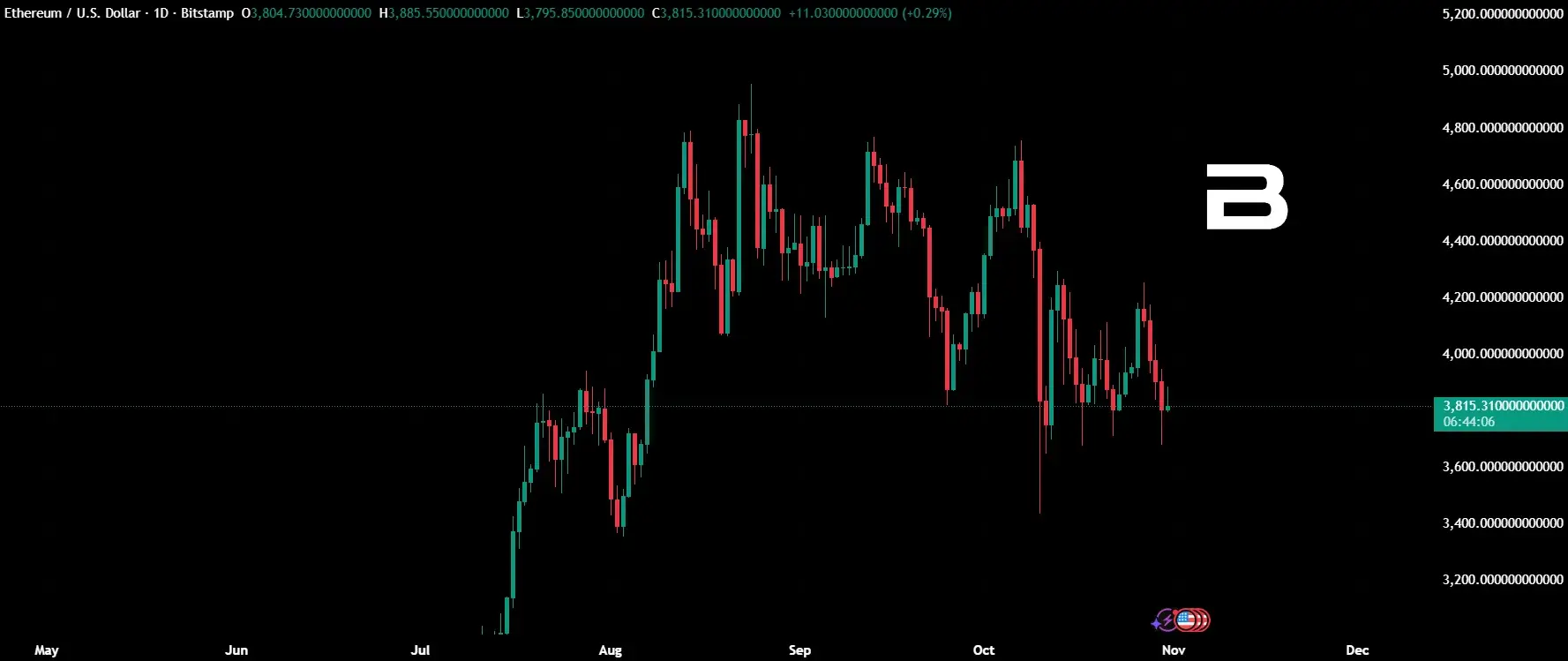
Understanding how to read cryptocurrency charts is more than just finding green or red candlesticks. It’s about learning the language of the market. Once understood, its chaotic movements begin to tell a story.
I still remember the first time I zoomed out on a Bitcoin chart and realized that every pump and dump had a rhythm. It’s like music, the tempo changes, but the patterns on cryptocurrency charts always have meaning.
Let’s decipher that rhythm together.
What is a crypto chart? Chart types (line, bar, candlestick)
Cryptocurrency charts are visual representations of prices over time and are the basis for any cryptocurrency price analysis.
You will mainly encounter three types:
- Line charts: Great for quick overviews and long-term trends.
- Bar graph: Displays opening price, closing price, high price, and low price.
- Candlestick charts: Preferred by traders because they reveal market sentiment through candlestick patterns.

Each candle tells a story. Green candles represent optimism and red candles represent fear. The wick shows how far the price has reached, and the body shows where it has settled.
💡 How do I read cryptocurrency charts as a beginner? Start with candlesticks. Candlesticks are the clearest visual map of buyer and seller behavior.
Main chart components: time frame, axis, volume bar
All charts have the same structure.
- The X-axis (bottom) shows the time from 1 minute to 1 day candlesticks.
- The Y-axis (side) tracks price.
- Volume bars below the chart indicate the strength of each move.

Volume confirms the truth. Is the pump powerful and the volume weak? It’s probably a fabrication. Breakout backed by mass production? That’s a certainty.
Candlestick basics and common patterns
Candlestick patterns are a trader’s visual language. Some important examples:
- Doji: A state of indecision in which neither buyers nor sellers have the upper hand.
- Hammer: Buyers rebound after selling (bullish reversal).
- Shooting Star: Often signals the end of a rally.
Once you recognize these crypto chart patterns, you’ll start seeing them everywhere, especially when day trading cryptocurrencies or analyzing short-term momentum.
Support lines, resistance lines, trend lines
These three are the backbone of technical analysis.
- Support acts as a price floor for buyers to intervene.
- Resistance acts as a ceiling from which sellers can profit.
- Trend lines connect swing points and indicate overall direction.

💡 What is the difference between support and resistance? Support causes the price to rise. Resistance pushes it down. Together, these define the key decision-making zones in any market.
The more a level is tested, the stronger it becomes. Combine trend lines and moving averages to increase confirmation and improve directional bias.
Indicators: moving average, RSI, MACD, volume
Indicators provide a second layer of insight beyond price structure.
- Moving averages (MAs) smooth prices and emphasize trend direction.
- RSI (Relative Strength Index) indicates overbought or oversold zones.

- MACD (Moving Average Convergence Divergence) indicates changes in momentum.
- The volume overlay confirms whether the breakout has real strength.
When these RSI and MACD indicators match support and resistance, it gives you confidence in your trading decisions.
Combination of patterns, indicators and volumes
Here’s a simple workflow for our trusted crypto chart guide:
- Identify trend direction using moving averages or trend lines.
- Find related candlestick patterns (hammer, triangle, double top).
- Check for breakouts in volume.
- Please check the RSI or MACD alignment before entering.
When all three are in place, the odds are in your favor, and smart traders call it an edge.
Practical tips and mistakes to avoid
- Don’t overcrowd your chart with indicators. Clarity trumps clutter.
- Don’t chase green candles. Wait for confirmation.
- Always zoom out. Short-term charts can lie.
- And remember that trading psychology is your greatest strength. Charts show probabilities, not certainties.
I once ignored ETH’s obvious resistance and got stopped out within minutes. Lesson learned: Patience pays off, and the chart always whispers before it screams.
final thoughts
Learning how to read cryptocurrency charts takes time, but once the patterns develop before your eyes, it’s like unlocking a new trading language.
Combine technical analysis and emotional discipline, practice risk management, and use Web3 wallet trading integration tools for a seamless experience. Eventually, you’ll develop your own rhythm, one candle at a time.
FAQ
What are the main types of cryptocurrency chart patterns?
Some of the most common cryptocurrency chart patterns include triangles, double tops/bottoms, head and shoulders, and continuation flags. These patterns are indicative of market sentiment and the possibility of a reversal.
How do I know when to buy or sell based on chart patterns?
Traders often combine candlestick signals with volume spikes and RSI confirmations before taking action. Rather than chasing the first move, wait for a breakout and retest.
Is technical analysis of cryptocurrencies reliable?
It’s a probability game and there are no guarantees. Technical analysis works best when combined with sound risk management and awareness of basic catalysts.
Can I analyze or trade crypto charts using Web3 Wallet?
yes. Many modern Web3 wallets integrate with DEX analytics and on-chain dashboards, allowing you to track charts and trade directly within your decentralized app.
What are the best tools to easily read cryptocurrency charts?
For beginners, platforms like TradingView and Bybit’s integrated charting tools are intuitive, detailed, and support indicators like RSI and MACD.