

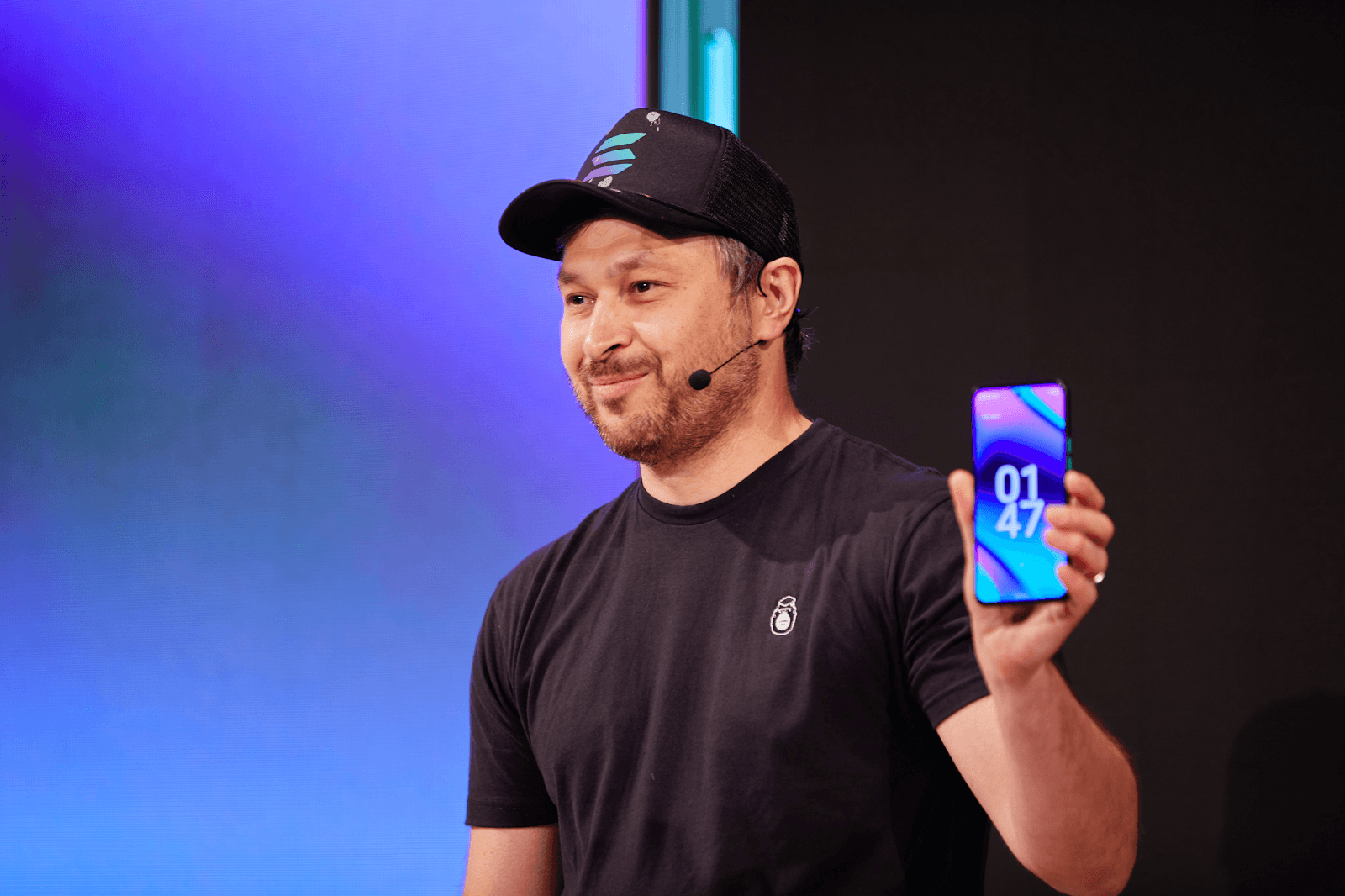
Two years after its hyped debut, official support for Solana’s Saga phones is ending, while things aren’t looking much better for other crypto phones.
Solana Mobile has quietly ended software and security support for its first-generation Saga phones, quietly ending the device’s lifecycle just over two years after its debut in May 2023, leaving approximately 20,000 active units without further updates.
The smartphone, which was marketed around the Seed Vault on the device, briefly gained mainstream attention when an airdrop of meme coins made the preloaded wallet unusually valuable.

Despite the initial enthusiasm, demand never matched the manufacturers’ ambitions. Saga was launched for around $1,000 and just four months after its release. Discounted to about $599 This is because sales have slowed down. Defiant reviewed the smartphone at the time.
Even YouTuber Marques Brownlee, who has over 20 million subscribers and a track record of reviewing flagship products from Apple and Microsoft, slammed it as “the failure of 2023.”
With Saga no longer supported, Solana Mobile is shifting its focus to its second generation phone, Seeker. Seeker began shipping in early August of this year as a more affordable and accessible successor.
Solana Labs did not respond to The Defiant’s request for comment.
Hopping between networks
The situation in the rest of the cryptophone field is not very good. Supported by both Aptos and Sei, JamboPhone aimed to be affordable with a list price of $99 and a preloaded Web3 stack.
“Priced at just $99 and already sold in over 40 countries, the JamboPhone is more than just a device. It’s a bridge to the Aptos ecosystem and seamlessly integrates through pre-installed applications such as Petra, the leading Aptos-compatible wallet, and the Jambo app,” the Aptos Foundation said in a February 2024 blog post.

Launched in 2023, the phone is powered by Unisoc’s T606 chip with two older A75 cores and six weaker A55 cores, a setup reviewers slammed as slow and outdated.
“[…] “The A75 big core has already reached the level of the small core of the Snapdragon 690, a mid-to-low-end chip released by Qualcomm in 2020. Performance levels that were barely acceptable eight years ago are now dire,” BlockBeats wrote in its review.
User feedback showed similar results, citing slow performance, weak structure, and minimal after-sales support.
“There’s a software glitch. It runs stock Android, but the performance is like a 5-year-old phone. The UI lags, the apps freeze, and it’s not what you would expect in today’s smartphone era,” one customer wrote.
Unlike Saga, Jambo’s software still receives updates, and the latest version of the Jambo app went live on October 14, but the problems haven’t stopped piling up. On the application’s Google Play page, users complain about weak airdrop bonuses, unresponsive support, and regional restrictions when redeeming offers.
After raising $30 million in Series A funding from Paradigm, Pantera Capital, Coinbase Ventures, OKX Ventures, and more, the Jambo Labs team has taken a step forward and launched the project’s own J-Token.
JToken, touted as the native token that “unites the Jambo ecosystem”, has lost more than 94% of its value since its launch in February, according to data from CoinGecko.

Shortly after the debut of the JamboPhone, the developer launched the JamboPhone 2 with a focus on Solana.
The Defiant reached out to Jumbo Laboratories but did not receive a response.
Premium for Web3
CoralApp, backed by Binance, has taken a more premium path. The project was promoted in Binance Labs’ Season 4 program as a “fitness platform and marketplace built on blockchain technology.”
Although CoralApp never officially labeled the 2024-launched Coral Phone as a BNB-centric device, the Binance military widely promoted it as such. Early buyers were offered a limited “early bird” slot, with the price reportedly around 1,500 USDT.

The CoralPhone’s specs show a Snapdragon-class chipset, 120Hz AMOLED display, and 50MP main sensor, and while capable, it’s not on par with Apple’s latest devices.
For comparison, even Apple’s iPhone 17 Pro Max starts at $1,199 for the base 256GB configuration and stretches to $1,999 for the top 2TB option. That means the CoralPhone’s initial price of $1,500 is about $300 more than Apple’s base model.
The team claims to have shipped more than 10,000 devices, but The Defiant was unable to independently verify that number. Defiant also reached out to the CoralApp team but did not receive a response.
So while crypto phones continue to promise the future of decentralized technology, all that has been proven so far is that airdrops don’t build an ecosystem and hype doesn’t patch firmware.