

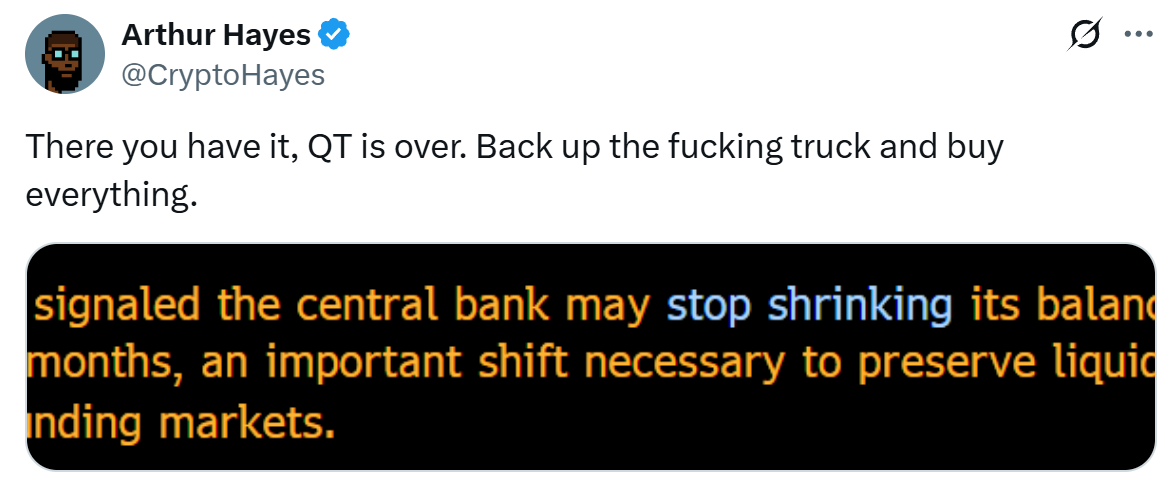
Bitcoin’s performance in November is a historically pivotal time, with the cryptocurrency often experiencing its biggest rally of the year. Since 2013, Bitcoin has gained an average of 42.51% this month, and if this trend repeats, the digital asset could rise above $160,000. But analysts warn that broader macroeconomic factors could influence this potential surge, adding further complexity to the market’s trajectory.
- Bitcoin has historically seen impressive gains in November, averaging over 40% gains since 2013.
- Current macroeconomic signals, such as a possible US Federal Reserve interest rate cut and easing trade tensions between the US and China, could fuel Bitcoin’s rally.
- Global economic uncertainties such as the US government shutdown and trade tariffs continue to impact the crypto market.
- Easing trade tensions and changes in monetary policy are factors that can positively impact crypto investment and DeFi growth.
- Market analysts have emphasized the need to consider multiple macro factors, along with seasonal patterns, when predicting Bitcoin’s short-term movements.
Investors are closely monitoring key geopolitical and economic developments as the world’s major cryptocurrencies enter their most volatile and potentially profitable month. Market sentiment remains bullish, especially when macroeconomic policy favors risk-on assets like Bitcoin and Ethereum, which benefit from low interest rates and expansionary monetary policy.
US and China ease trade tensions
A high-profile meeting between US President Donald Trump and Chinese President Xi Jinping on Thursday was a positive sign for the global economy, suggesting a possible resolution to the ongoing trade dispute. The two leaders agreed to reduce tariffs on China in exchange for a crackdown on China’s production of fentanyl, the resumption of imports of U.S. soybeans, and a one-year suspension of rare earth export restrictions.
President Trump expressed optimism for a comprehensive trade agreement, saying, “I am hopeful that a trade agreement with China will be reached soon.” Historically, tensions such as the threat of tariffs have caused market volatility, including large-scale crypto liquidations like the $19 billion lost in the October 11 crash. The incident highlighted how geopolitical uncertainty can dampen market sentiment, with some experts calling the recent talks merely a “pause” rather than a resolution to the trade war.
Meanwhile, analysts say a resolution to trade tensions could provide a tailwind for the crypto market, boosting investor confidence and institutional participation.
Federal Reserve System and Monetary Policy Outlook
The Fed’s recent quarter-point rate cut brings the benchmark interest rate down to its lowest level in three years. The Fed’s meeting scheduled for Dec. 10 will be crucial, with market expectations pricing in 63% of the possibility of a rate cut. Fed Chairman Jerome Powell’s comments hinting at uncertainty have made traders cautious.
Lower interest rates typically stimulate risk assets, including cryptocurrencies, by reducing borrowing costs and encouraging investment. In addition to interest rate cuts, the Fed’s planned suspension of its quantitative tightening (QT) program on December 1 could lead to an influx of liquidity into the market, further supporting crypto prices.
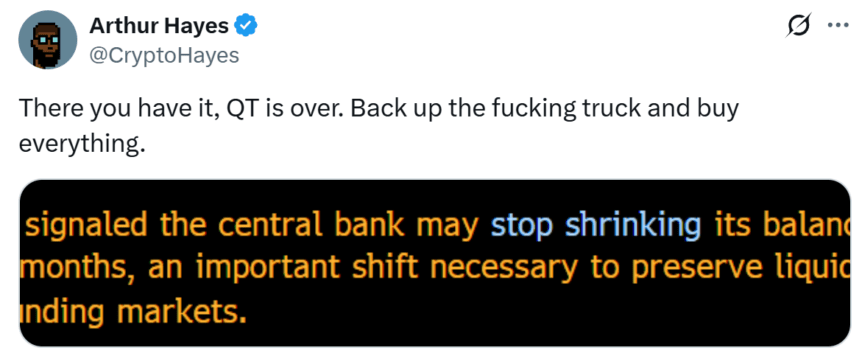
A reversal from quantitative tightening to quantitative easing (QE) injections into the economy could further stimulate cryptocurrency markets, as new liquidity often flows into alternative assets such as Bitcoin and NFTs.
US Government Shutdown and Market Impact
The extended government shutdown, now in its fifth week, continues to weigh on investor sentiment. The impasse between Democrats and Republicans over the spending bill has hindered progress on crypto-friendly legislation, including the authorization of ETFs and regulatory clarity measures like the Crypto Act and the CLARITY Act.
Former President Trump recently called for an end to the Senate filibuster and called attention to political divisions that could slow progress on these important policies. The resolution of the shutdown is expected to increase regulatory transparency and attract interest from financial institutions, potentially creating positive momentum for the crypto sector.