

The U.S. Treasury and IRS have introduced the 2025-31 Revenue Procedures to provide crypto ETFs and trusts with a clear path to stake digital assets and share the rewards with investors.
This safe harbor resolves long-standing tax and legal issues that have prevented institutional investors from participating in proof-of-stake (PoS) networks.
This development represents a major milestone for institutional adoption of cryptocurrencies. We align staking procedures with SEC compliance, providing the traditional financial sector with a secure and compliant way to earn money from cryptocurrencies.
sponsored
sponsored
US Treasury and IRS open safe harbor for crypto staking in ETFs
The US Treasury and IRS have officially recognized staking as a tax-compliant activity for regulated investment products, marking a pivotal moment for cryptocurrency adoption.
Under the 2025-31 Revenue Procedure, exchange-traded funds (ETFs) and trusts can now stake digital assets and distribute rewards directly to investors. This represents an unprecedented move to legalize staking within the traditional financial system.
Treasury Secretary Scott Bessent said the guidance will “promote innovation and ensure the United States remains a world leader in digital assets and blockchain technology.”
Safe harbor framework enables staking for institutional investors
The new rules introduce a safe harbor for regulated cryptocurrency funds and define how assets can be staked while complying with tax and securities laws.
According to ConsenSys attorney Bill Hughes, a trust may stake on an unauthorized proof-of-stake (PoS) network if:
- Hold only one type of digital asset and cash.
sponsored
sponsored
- Use a qualified custodian to manage keys and perform staking.
- Maintains an SEC-approved liquidity policy to ensure redemption of staked assets.
- maintain separate and independent agreements with staking providers;
- This means limiting your activities to holding, staking, and redeeming assets and not engaging in discretionary trading.
This structure not only protects investors, but also removes years of legal and tax uncertainty that has prevented fund sponsors from consolidating staking yields.
“[The guidance] It transforms staking from a compliance risk to a tax-permissible and institutionally viable activity,” Hughes explained.
sponsored
sponsored
Analysts call this a “game changer” for crypto ETFs
ETF analyst Eric Balciunas highlighted this development, confirming Bessent’s post was the first time a Treasury secretary has tweeted about ETFs.
Market analysts see this decision as a turning point for Ethereum, Solana, and other PoS networks. BMNR Bullz, a popular account on Twitter, described this as a big win for Ethereum and crypto ETFs, predicting that it could free up a large amount of institutional capital.
“Another big win for Ethereum and crypto ETFs…this is the kind of regulatory clarity that will free up trillions of dollars in institutional capital. ETH is leading the way with record stablecoin volumes, institutional staking, and tokenized assets all booming on Ethereum. If ETFs can offer staking yields directly to investors, it would be a game-changer for mainstream crypto adoption,” they wrote.
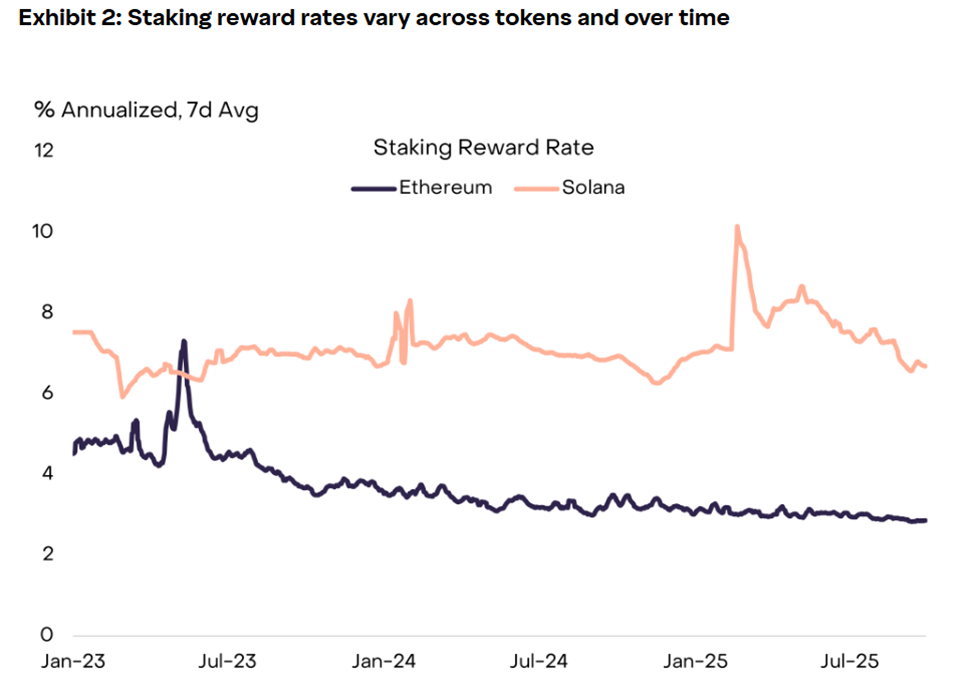
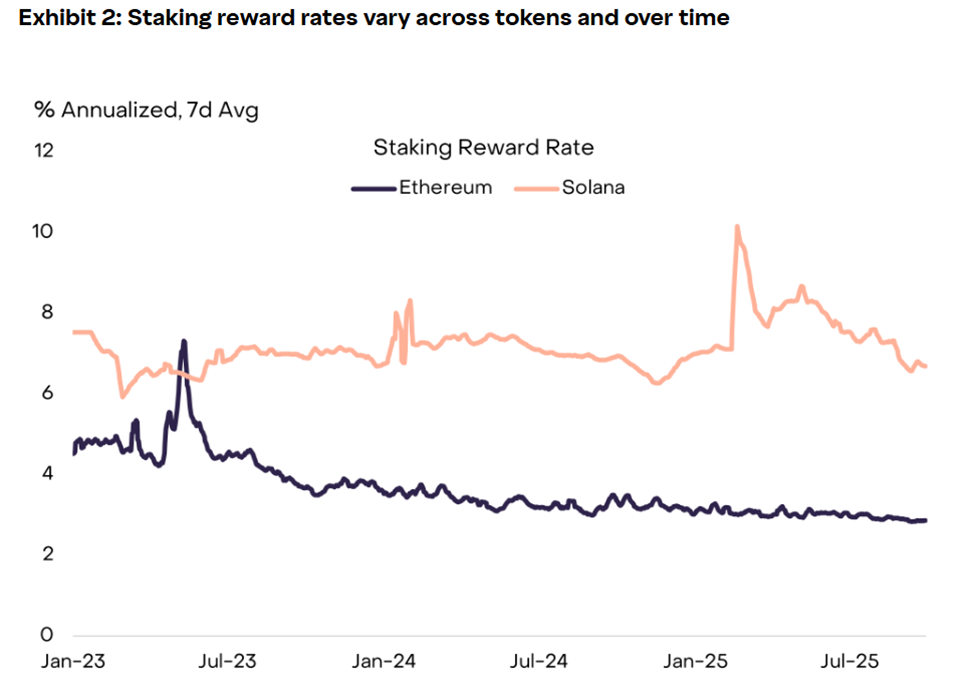
According to Grayscale research, Ethereum staking yields have averaged around 2.98% over the past six months, while Solana typically offers 4% to 8% annually. These interest rates may soon be incorporated into ETF products.
sponsored
sponsored
“…staking is now tax-recognized, compliant, and ready for institutions to take full advantage of,” said Crypto America host Eleanor Terret.
Industry research reflects such demands for clarity. EY’s 2025 Institutional Digital Asset Survey identified regulatory ambiguity as the biggest barrier to adoption.
Amundi Research similarly found that legal certainty and strong custody structures are key to mainstream acceptance.
The new tax-approved framework paves the way for staking-enabled ETFs and trusts to become standard products.
Products like REXShares’ Ethereum Staking ETF, launched in September 2025, are already showing strong investor appetite.
This development transforms staking from a niche cryptocurrency activity to a compliant, income-generating financial strategy for both retailers and institutional investors.
With the US providing the clearest legal recourse to date, more funds are likely to flow into the PoS ecosystem. This could strengthen the network’s security, decentralization, and investor confidence in the next phase of cryptocurrency integration.