

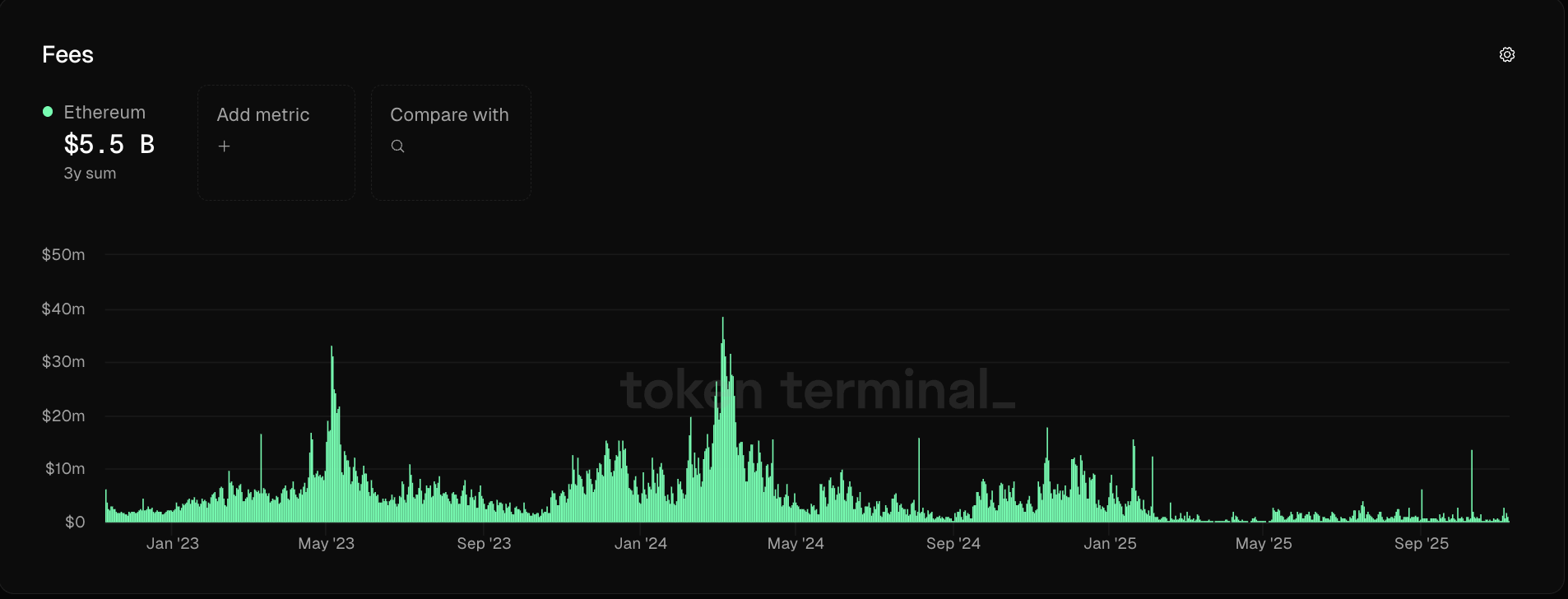
Recent developments in the Ethereum network highlight significant changes in transaction costs, with gas prices plummeting to historic lows amid continued market uncertainty. As crypto markets slow following October’s sharp market decline, transaction costs across the Ethereum ecosystem have reached levels not seen in recent months, creating both opportunities and challenges for participants and stakeholders alike.
- Ethereum gas fees have dropped to just 0.067 Gwei, making trading very affordable.
- Currently, on-chain transaction costs average around $0.11 and NFT sales average $0.19.
- The decline followed a period of high fees during the October market crash when fees peaked at Gwei 15.9.
- Low fees have led to an increase in on-chain activity, but critics have warned that the fees threaten the sustainability of Ethereum’s fee model.
- Ethereum’s transaction fee revenue has fallen by 99% since its 2024 upgrade, raising concerns about network security and incentives.
Gas fees on Ethereum’s Layer 1 blockchain have fallen dramatically to their lowest levels in years, reaching just 0.067 Gwei on Sunday amid a subdued cryptocurrency market environment. The decline follows one of the most volatile periods in the history of cryptocurrencies, marked by a market crash in October that saw network transaction fees rise to 15.9 Gwei on October 10th. Since then, fees have stabilized, falling well below 1 Gwei from October to November, and now average around $0.11 per transaction, according to EtherScan.
While traders are seizing the opportunity of low transaction costs to carry out on-chain activities, industry experts warn that such low fees could undermine the network’s long-term security and economic model.
Back in 2021, transaction fees during times of network congestion could exceed $150, highlighting the dramatic reduction in costs since then. Industry analysts report that the Ethereum Dencun upgrade in March 2024, aimed at lowering fees for layer 2 scaling solutions, was a pivotal factor in this decline, leading to a 99% decline in the network’s fee-based revenue.
> Critics have warned that the continued presence of low transaction fees could threaten the security of the Ethereum network by reducing incentives for blockchain validators to process transactions and maintain network integrity. Lower pricing and revenue may also indicate that users are increasingly migrating away from the base layer and favoring layer 2 solutions for scalability.
Ethereum’s approach to scaling relies heavily on a layer-2 network ecosystem, which reduces congestion and reduces costs, but also poses challenges to the sustainability of the main chain’s revenue model. According to Binance research, this multi-layered strategy could act as a double-edged sword within the broader context of blockchain competitiveness and security concerns.
As the ecosystem evolves, balancing low transaction costs and network security remains a key challenge for Ethereum and the broader blockchain industry.
While the low-fee environment currently offers users an attractive opportunity to execute faster and cheaper trades, its long-term impact continues to be a topic of debate among industry leaders and analysts.