

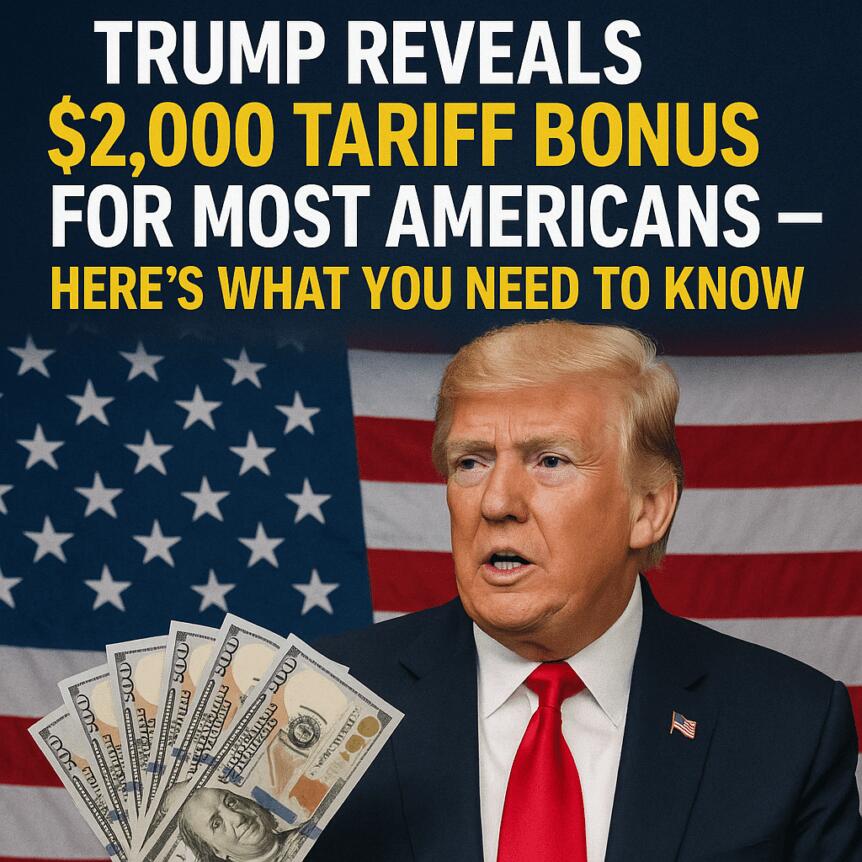
- President Trump is proposing a $2,000 stimulus dividend funded by tariffs, excluding high-income earners.
- The U.S. Supreme Court is considering the legality of the tariffs, with approval expected to be unlikely.
- Market traders have expressed skepticism about the policy approval, with the probability falling below 25%.
- Analysts warn that while the market may rise in the short term, long-term inflation could erode purchasing power.
- Cryptocurrency investors see potential for asset returns, but are wary of inflation risks from stimulus packages.
President Donald Trump announced Sunday that most Americans will receive a $2,000 dividend paid from tariff revenue as part of a broader economic stimulus package. President Trump stressed that the benefits exclude high-income earners and are intended to encourage consumer spending amid ongoing economic challenges.
The legal situation is unclear, as the U.S. Supreme Court is currently considering whether the administration’s tariffs are legal. Market sentiment remains cautious regarding policy. Prediction markets indicate that the chances of the court approving the tariffs are low, with Kalsi traders estimating the chance to be just 23%, and Polymarket reflecting an even lower chance at 21%. President Trump questioned the fairness of the legal restrictions, saying:
“The President of the United States is allowed to suspend all trade with foreign countries and license them, which is far more onerous than tariffs, and has the full approval of Congress, but is he not allowed to impose simple tariffs on foreign countries, even in the interest of national security?”
Financial markets reacted positively to the announcement, with investors seeing the proposed stimulus package as a boost for cryptocurrencies and other asset classes. But experts warn that these short-term gains could come at a heavy cost in the long term. The Kobesi letter suggests that about 85% of U.S. adults will likely receive a stimulus check, reflecting a pattern observed during the COVID-19 pandemic.
Simon Dixon, an investment analyst and supporter of Bitcoin, commented that if stimulus is not directed towards productive assets, their value is likely to decline over time, causing the dollar to inflate and erode its purchasing power. Meanwhile, market analyst Anthony Pompliano stressed that although risks remain, stocks and cryptocurrencies such as Bitcoin tend to rise in response to expansionary monetary policy.
While short-term optimism lifts markets, critics argue that long-term effects, particularly inflation and rising debt, could undermine economic stability. As conversations around crypto regulation and fiscal policy evolve, the coming weeks will be critical in determining whether these stimulus measures serve as a sustainable economic strategy or simply inflate asset bubbles.