

The DeFi lending protocol had suspended withdrawals on three stablecoin markets after risk manager Gauntlet warned of a liquidity crunch for Elixir’s deUSD token.
Decentralized crypto lending platform Compound has resumed withdrawals from two out of three stablecoin markets where withdrawals had been suspended since yesterday. Withdrawals were temporarily suspended after risk manager Gauntlett cited a liquidity crunch related to institutional liquidity firm Elixir’s deUSD ecosystem.
To prevent potential bad debts, Gauntlet had recommended that Compound temporarily suspend withdrawals from the three markets where deUSD and sdUSD are accepted as collateral: USDC, USDS, and USDT on the Ethereum mainnet.
In a new comment on the recommendation from Gauntlet, originally posted on November 4, Gauntlet said that withdrawals on the Ethereum USDC and USDS markets are not suspended and “users can resume normal activities.” Regarding USDT, the comments suggest that users transfer more USDT to affected markets to “fully cover temporary reserve gaps and provide an additional safety buffer.”
This suspension was proposed as a precautionary measure while voting on Gauntlet’s separate risk parameter governance proposal continues, which passed on the evening of November 4th and was executed on-chain today at approximately 6:00 PM UTC.
pause
In the original recommendation post, Gauntlet explained the reason for the suspension, saying that Elixir’s synthetic dollar asset deUSD and its staked counterpart sdeUSD were facing a lack of liquidity, with sdeUSD falling to $0.86 while the protocol’s oracles still had a price of $1.06. According to Gauntlett, this price discrepancy is “considered a vulnerability” because it can cause borrowers to take on more than the market actually supports.
Compound implemented an outage, blocking new borrowings and withdrawals while allowing users to add liquidity, repay loans, or post new collateral.
According to data from DefiLlama, Compound currently has $2.26 billion locked in the overall on-chain lending market, making it the seventh largest lending protocol in DeFi.
US Dollar Depeg Elixir
Meanwhile, around 3:00 PM (UTC) today, deUSD plummeted from around $1 to $0.50, before rapidly falling further to near zero over the past few hours.
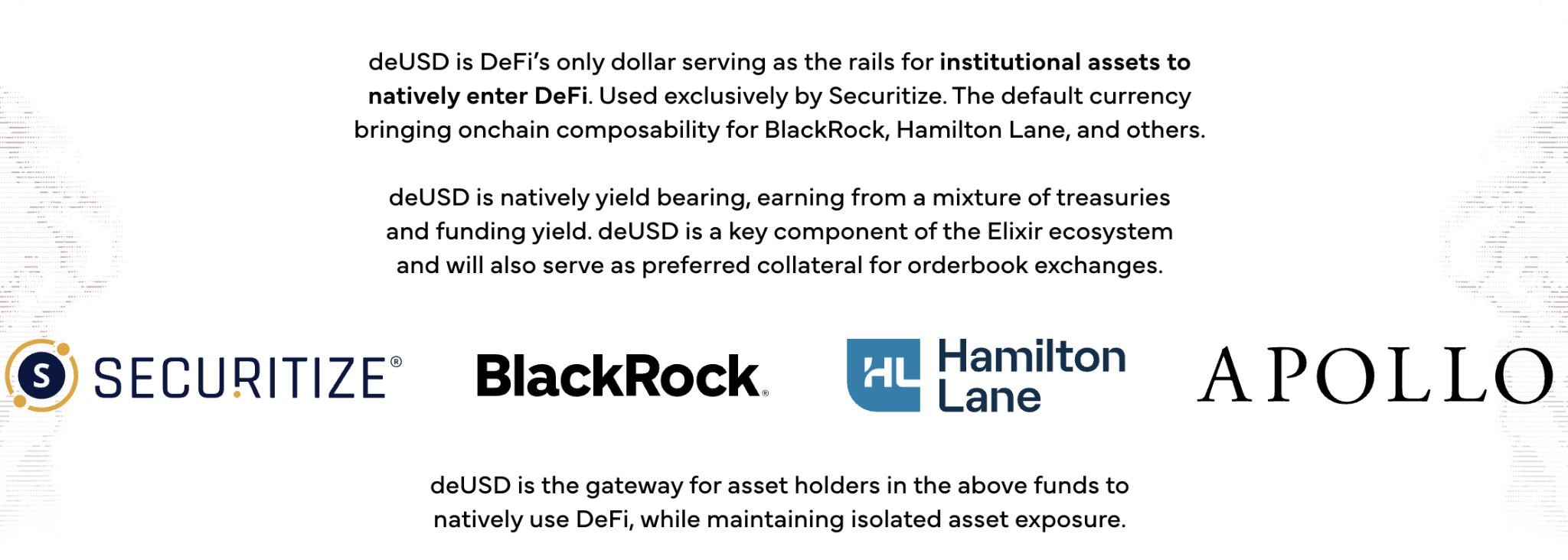
Elixir’s website describes deUSD as a “rail for institutional assets to natively enter DeFi,” and says the token will be used exclusively by Securitize and is a “gateway for asset holders” in funds from BlackRock, Hamilton Lane, and Apollo.

At the time of writing, deUSD’s price has not regained its dollar price peg and is around $0.028.

Everything is connected to the stream
The underlying shock can be traced back to yield optimization protocol Stream Finance, as its proprietary synthetic dollar token, xUSD, crashed to around $0.17 on November 4th.
As part of its recursive minting agreement with Stream, Elixir reportedly loaned the platform approximately $68 million while accepting xUSD as collateral. Concerns were already widespread in X’s post on Nov. 3, before Stream’s complete collapse, stating that Elixir “has full redemption rights on its lending position with Stream at $1.00.”
deUSD and sdeUSD took a hit when streams revealed losses of over $90 million, causing cascading stress beyond the compound and resulting in a full-blown collapse of deUSD as of just a few hours ago.
Meanwhile, Compound’s COMP price began to decline on November 3 due to the overall market downturn, but has remained flat in the past 24 hours.
ripple effect
The confusion also spilled over to fastUSD, a synthetic dollar-pegged token backed by deUSD and used by multiple protocols, including Yei Finance, currently the second largest protocol on the sei network by TVL.
In a Nov. 5 post on X, Yei Finance noted “the ongoing rapid situation in the USD market” and said it had suspended the protocol. The team later announced that it would repay the approximately $8.6 million it borrowed from USDC for staked Fast USD and confirmed that “all user funds on Yei remain fully solvent and 100% withdrawn.”
In the case of Yei Finance, the outage comes just weeks after launching CLO tokens on the Sei and BNB chains. As of October 14th, Yei Finance’s TVL reached nearly $230 million, which accounted for over 47% of SEI’s DeFi liquidity.
However, as of this writing, that number has decreased to $82.6 million.