

Bitcoin

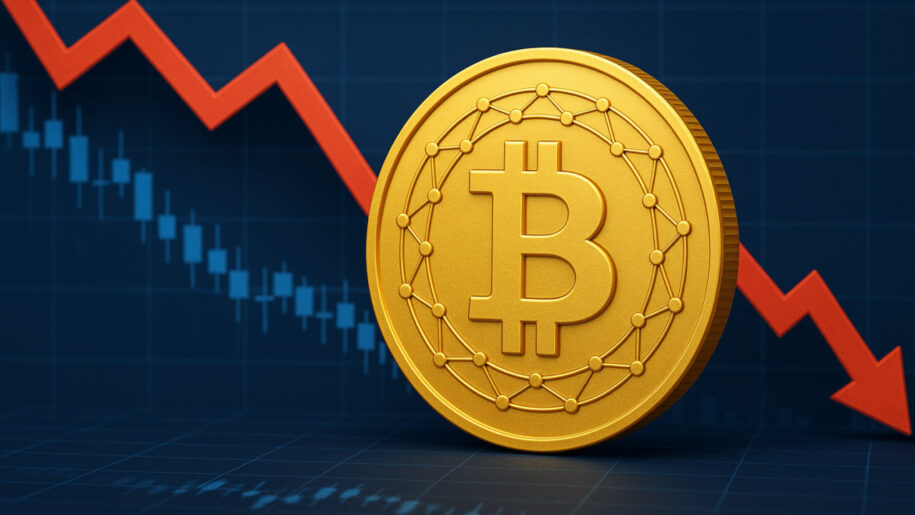
Vineet Budki, CEO of Sigma Capital, believes that Bitcoin prices may experience another dramatic crash before the next big rally and that investors have not yet understood the long-term nature of the asset they are holding.
Speaking at the 2025 Global Blockchain Congress in Dubai, Budokhi painted a picture of a mature but misunderstood market, one in which human psychology, rather than technology, drives extreme price fluctuations.
“The next big decline will be brutal, but not fatal.”
Budoki warned: Bitcoin The next market downturn could see it drop by up to 70%, possibly within the next two years. He pointed out that the cause of the potential crash is not a flaw in Bitcoin’s design, but rather the behavior of retail investors who still view Bitcoin as a speculative transaction vehicle rather than a financial network.
“When the market cools down, inexperienced investors panic because they don’t truly understand the purpose of Bitcoin,” Budke explained. “They’re following price trends, they don’t understand utility, and they’re the first movers to sell in a fear cycle.”
He emphasized that such corrections are natural to Bitcoin’s growth trajectory, arguing that volatility has been part of the network’s DNA since its inception. “Bitcoin could drop to $70,000 and still remain one of the most useful financial tools ever created,” he added.
Long-term outlook: The road to $1 million
Despite warning of a sharp retracement, Budoki is by no means bearish. He believes Bitcoin’s broad adoption curve is intact and expects it to reach or exceed $1 million per coin within the next 10 years. His reasoning is a blend of both speculative demand and functional adoption, and he predicts that long-term demand will far outweigh short-term volatility as more institutions, payment processors, and even governments integrate Bitcoin into real-world systems.
Budke’s view reflects a growing consensus among venture investors that Bitcoin is moving from a speculative product to a core financial product. “Speculation drives discovery, but practicality maintains value,” he said. “The next generation of investors will not only hold Bitcoin to get rich, but they will use it to move, save, and store value around the world.”
Is the 4 year cycle really over?
The debate surrounding Bitcoin’s famous four-year halving cycle has divided analysts. Once seen as the main driver of Bitcoin’s price surge, this cycle is increasingly seen as outdated.
We are in the most bullish quarter of the four-year cycle. #bitcoin pic.twitter.com/cYXgBMcGQp
— Root🥕 (@therationalroot) October 10, 2025
BitMEX co-founder Arthur Hayes recently claimed that macroeconomic forces are overshadowing Bitcoin’s internal issuance schedule. In his view, global interest rate policy and money supply growth play a much larger role in shaping market direction than the traditional halving events that once triggered bull markets.
But some believe this pattern will continue. Seamus Rocca, CEO of Xapo Bank, maintains that Bitcoin price trends still reflect not only macroeconomics but also cyclical investor sentiment. “As long as people treat Bitcoin like a high-risk growth asset rather than a hedge, the market will continue to move in recognizable cycles,” Rocca said.
Institutional investors redefine market dynamics
The biggest thing that has changed since Bitcoin’s early days is who owns it. According to data from BitcoinTreasuries.NET, large corporations, including corporations, governments, ETFs, and exchanges, currently own over 4 million BTC in total, representing nearly one-fifth of the total supply. This increased institutional presence has led to deeper liquidity and greater price stability, but it has not completely erased the cyclical nature of the crypto market.
Unlike individual traders, institutional investors tend to accumulate rather than panic sell, helping to cushion extreme volatility. But those exposures also mean Bitcoin’s price can react sharply to macroeconomic events such as interest rate decisions and liquidity shocks, similar to the behavior of traditional risk assets like tech stocks.
market of contradictions
Bitcoin in 2025 exists in contradiction. It is seen as both digital gold and a speculative tech stock, acting as both a hedge and a high-risk asset. This dual identity fosters instability, but also innovation and interest. Budki believes these contradictions are what makes Bitcoin’s evolution so fascinating.
“The market still doesn’t understand the essence of Bitcoin,” he said. “This is not just a speculative asset or store of value, but a financial protocol that underpins a whole new world system. But until that realization becomes mainstream, we will continue to see cycles of greed and fear.”
long game
For Budki, the future of Bitcoin is determined by the next 20 years, not the next two. He argues that temporary crashes are part of the natural process of purging overleverage and irrational exuberance. In his view, each modification helps strengthen the network by redistributing Bitcoin into stronger hands.
“Every major decline in Bitcoin’s history has ultimately led to new all-time highs,” Budke concluded. “If history rhymes again, the next collapse will not be remembered as a disaster, but as a stepping stone to Bitcoin’s march toward $1 million.”
The information provided in this article is for educational purposes only and does not constitute financial, investment, or trading advice. Coindoo.com does not endorse or recommend any particular investment strategy or cryptocurrency. Always do your own research and consult a licensed financial advisor before making any investment decisions.


Costa joined the team in 2021 and quickly established himself with his thirst for knowledge, incredible dedication and analytical thinking. In addition to covering a wide range of current events, he also writes excellent reviews, PR articles, and educational materials. His articles have also been quoted by other news agencies.