

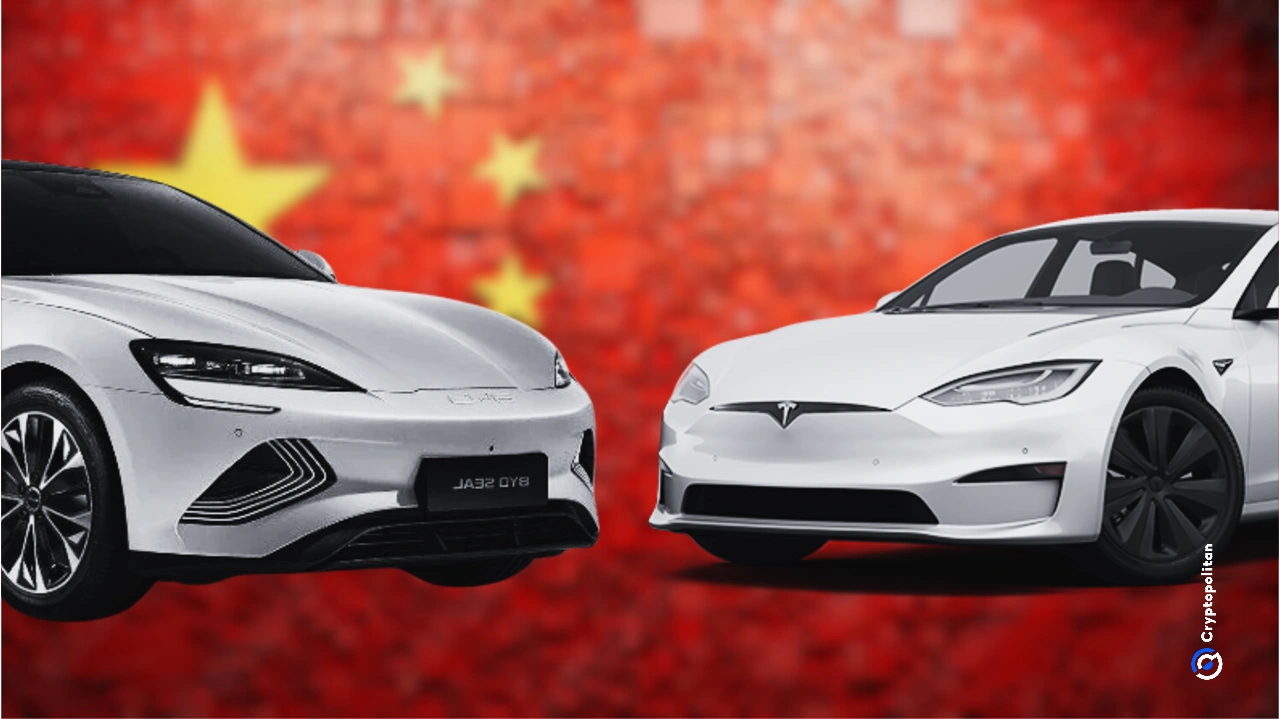

China’s electric vehicle (EV) boom is on the rise again, with increased usage for long-distance travel during China’s festival season. However, due to the potential impact of this development on the global oil market, exporters are far from buoyant this quarter.
Gasoline consumption in China decreased during Golden Week, a week-long holiday celebrated in October to commemorate the founding of the country.
This holiday has historically seen a spike in gasoline usage, sometimes leading to shortages. However, now deviations have occurred and new trends are already forming due to the following reasons: Introduction of EV.
Electric cars, typically reserved for urban commuting, are now mainstream, with almost half of new cars sold in China this year being fully electric or hybrid.
A driver’s journey reflects a nation’s changes
Recently, a Chinese man, Tianyu Jiang spoke to a reporter He talks about his experience driving an electric car from the southwestern Sichuan Basin to Beijing. This 2,000 km (1,242 mile) road trip was Jiang’s first long-distance trip in an EV.
“I’ve never taken such a big trip in an EV because I’ve always driven gasoline-powered cars, but with an EV, driving long distances is no longer a pain.”
His story is far from unique: China’s Ministry of Transport reports that of the 63.5 million car trips recorded during the eight-day holiday, about a fifth were in electric or hybrid vehicles.
Charging stations, which were once found only in urban areas, are now scattered along major routes across the country. “During peak travel times, you have to wait both for charging and refueling,” Jiang said. “If you really need to charge, you can get off the highway and find a charging station within 10 kilometers (6 miles) and it’s cheap.”
Petrol demand stalls as oil exporters feel the cold
The most significant impact of this change is being felt not on China’s highways, but in the global fuel market. For the first time in decades, the country’s traditional holiday surge in gasoline consumption did not materialize. Instead, demand in October fell nearly 9% from a year earlier to about 12.5 million tonnes, according to consultancy Sublime China Information. Average daily consumption has been flat since September, bucking the normal seasonal increase.
Gasoline demand in China, the world’s largest country, is estimated to peak in 2023. The research arm of state oil company Sinopec expects consumption to fall by more than 4% this year as EVs rapidly replace internal combustion engines.
For the world’s oil exporters, this is a warning sign that China’s long-anticipated peak in oil demand is no longer a distant possibility. a national energy researcher predicted in September that China’s overall oil demand would peak by 2027, with only petrochemical feedstocks offsetting the decline in shipments.
Dependence on EVs will increase further in the future
Charging ports have increased by more than 54% since last year, helping make long-distance EV travel a reality for millions of people.
Companies like CATL are now moving further to the forefront by developing ultra-fast charging systems that can refill EV batteries in minutes. At the beginning of this year, robin zenCATL’s founder predicted that by 2028, half of China’s truck market will be electric, and that once this is achieved, diesel prices will collapse.
A decline in gasoline demand in China, the world’s largest oil importer, threatens to undermine one of the key pillars of global oil demand growth. Exporters in the Middle East, Africa and Latin America, which have long relied on Chinese patronage to absorb supplies, may face shrinking profit margins and may need to take more aggressive steps in diversifying their energy economies.
Join Bybit today and earn up to $30,050 in trading rewards