

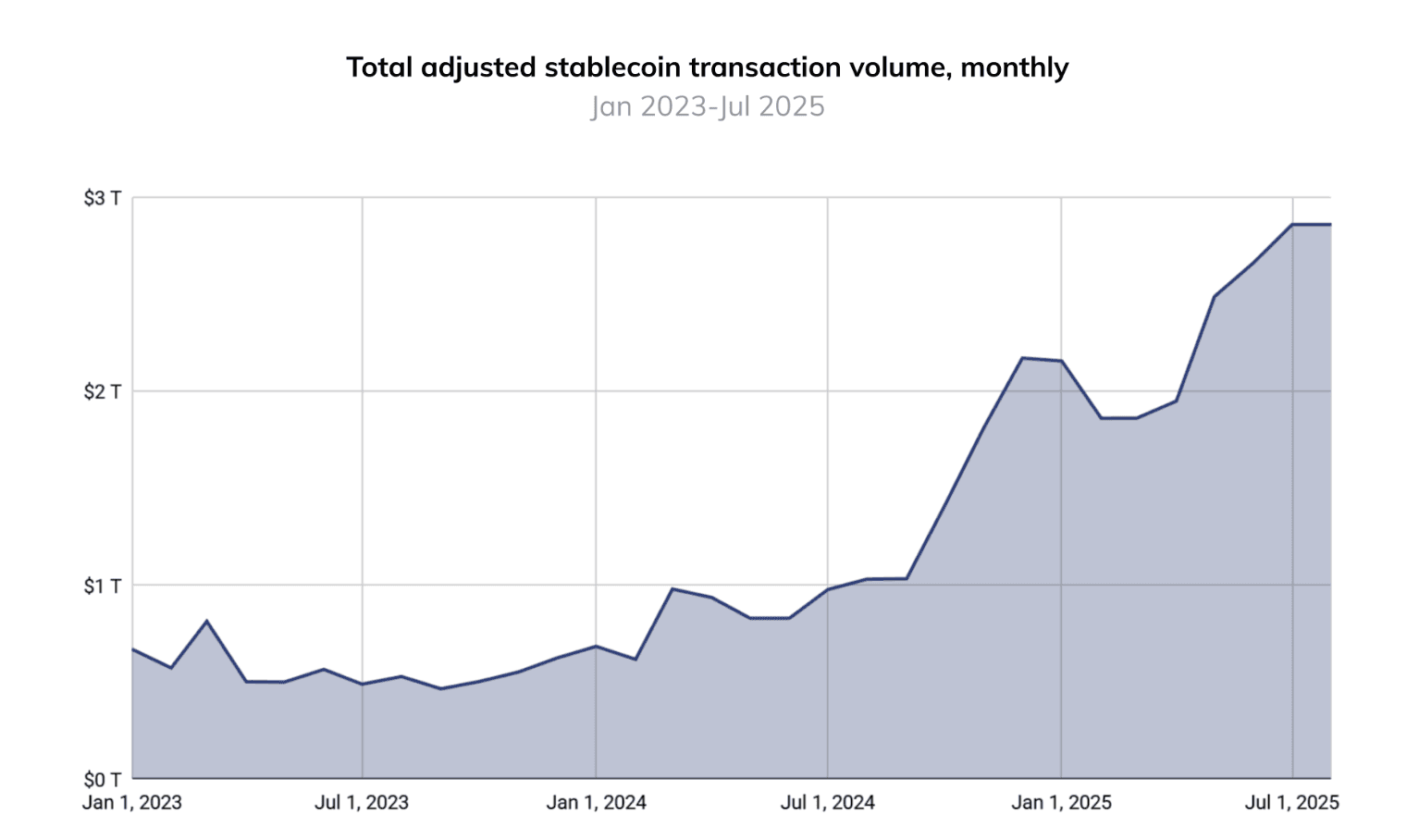
Bitcoin may dominate the crypto headlines, but the real growth story over the next five years will be stablecoins, the digital dollars that modernize the way money moves around the world.
Yes, the original cryptocurrency is fast becoming the ideal non-sovereign global store of value, with a market capitalization of $2.3 trillion, but stablecoins already significantly outperform Bitcoin in everyday transactions because they serve a transactional purpose. As of October 6, Bitcoin’s 24-hour trading volume was $63.8 billion, while stablecoin trading volume was $146 billion, more than double that amount.
There’s a simple reason for this. Stablecoins are more than just investable assets to hold; they have real-world utility. Stablecoins are driving much more than just DeFi. They are increasingly used as a global currency to support payments and cross-border financial flows. Furthermore, as artificial intelligence is integrated into everyday life and soon into commerce, stablecoins could become the currency for machine-to-machine transactions by AI agents.
Bitcoin’s uses are expanding as Wrapped BTC and the emerging Bitcoin Layer 2 network look to integrate it into DeFi and allow dApps to be built on top of it, but fundamentally Bitcoin will remain a store of value. Other blockchains are doing a much better job of providing a decentralized, smart contract, programmable platform for building the future of finance. Stablecoins are purpose-built to provide a better global payment solution than the traditional centralized status quo (SWIFT, ACH, credit card payments). As mainstream adoption increases, stablecoins will become a large part of everyday payment usage.

Chart: Chainaracy 2025 Global Adoption Index
Look at Venezuela. USDT is the backbone of daily economic activity. With rampant inflation (the IMF puts it at 180%) and physical dollars in short supply, this is certainly an extreme example, but it provides a direct use case of how stablecoins can easily be used to pay for groceries or a haircut.
Stablecoins are rapidly gaining traction because they facilitate something that Bitcoin has never been able to do at scale: instant peer-to-peer payments. While Bitcoin’s 10-minute block time, network fees and high volatility make it unsuitable for everyday transactions, stablecoins settle in seconds, cost a penny (sometimes less than a cent), and maintain stability in value.
Practicality is key
The success of stablecoins is not due to speculation but to efficient practicality. Stablecoins are quietly becoming the most used form of digital currency around the world. Stablecoins are rapidly disrupting the global remittance market, worth approximately $780 billion annually, by offering faster and lower-cost cross-border remittances.
It is also starting to disrupt the payments market, as giants like Stripe, Visa, PayPal, and other fintechs incorporate stablecoin payments that are faster, cheaper, available 24/7, and accessible worldwide. And since stablecoins are built in by fintechs and payment processors, most people won’t know that they use blockchain rails behind the scenes.
The current US administration has made it clear that it views stablecoins as a financial innovation and essential to maintaining the dollar as the world’s reserve currency. It puts the emphasis on their backs, as evidenced by the passage of the GENIUS Act as the first step in this process.
While government agencies draft stablecoin regulatory “rules of the road” based on the GENIUS Act, the devil will be in the details. How reserve assets are defined, which companies are allowed to issue dollar-backed tokens, what redemption rights are guaranteed to users, and whether these digital dollars can move freely between public and private blockchains. These choices will determine whether U.S.-regulated stablecoins can compete globally or fall under conflicting scrutiny. This administration risks losing control of the future of money unless it ensures that dollar-backed stablecoins can dominate on the world stage.
For the reasons mentioned above, I believe that the total amount of stablecoins minted may exceed the market capitalization of Bitcoin in the short term.